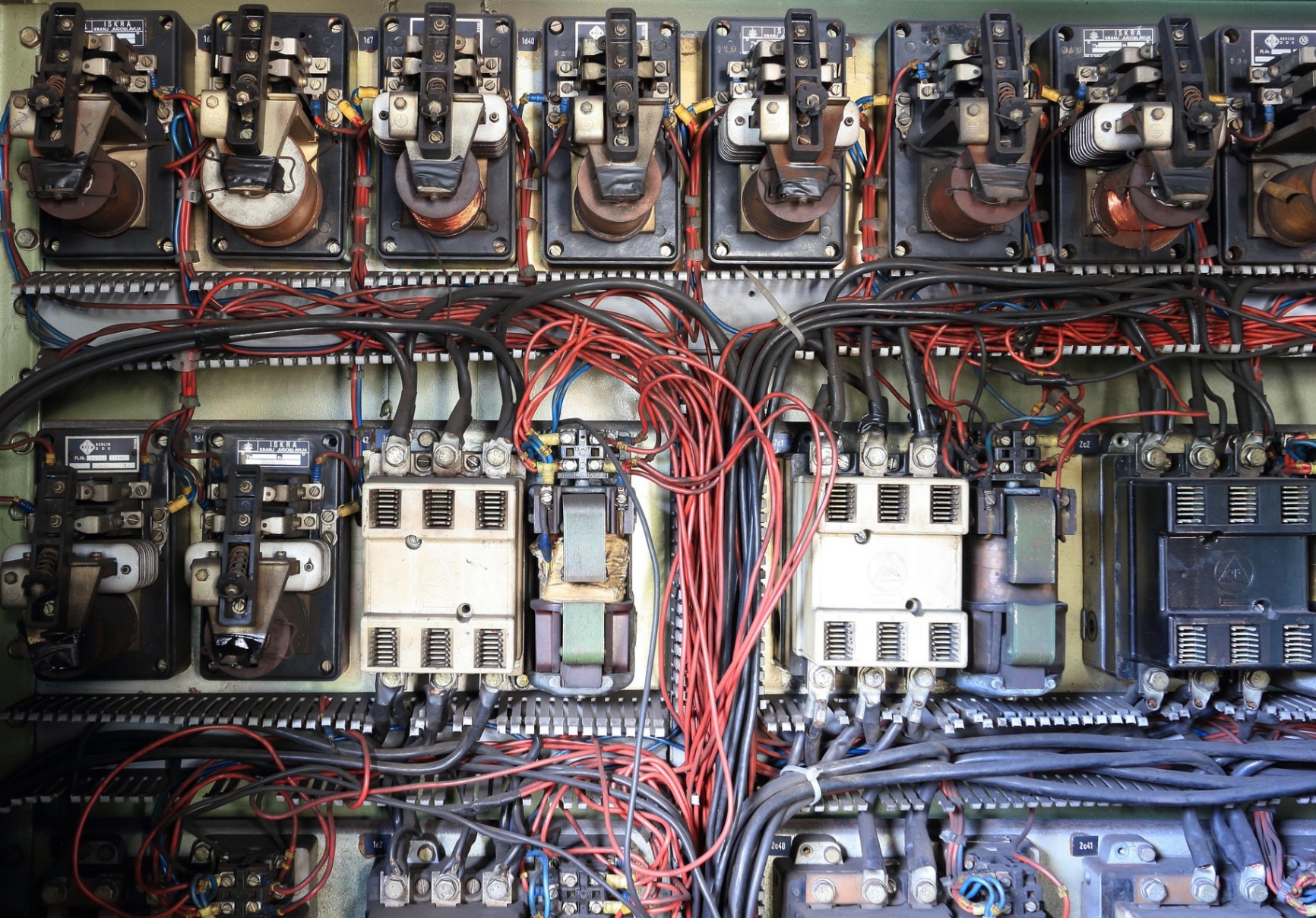
Zodhya is now the global pioneer now in the RIPE approach (Resilience Intelligence and Power Effectiveness).
Walk into any building, be it a factory, an office, or a hotel, and there’s one thing quietly powering everything: energy.
But here’s what most people don’t see. That energy isn’t constant. It’s not stable. And it’s definitely not predictable. It changes every minute.
When more people walk in, energy demand rises.
When machines run harder, the load shifts.
When systems age or behave differently, inefficiencies creep in.
In reality, every facility is constantly changing. And yet, most energy systems are still managed like nothing ever changes.
Why do we need RIPE?
Today, most facilities rely on systems that tell them what already happened. At best, they’ll show a dashboard:
- How much energy was used
- when it was used
- maybe where it was used
But that’s where it stops. They don’t explain why something happened. They don’t warn you before something goes wrong. And they definitely don’t tell you what to do next.
So what happens?
Problems quietly build up in the background. It could be a machine that starts behaving slightly differently, or an energy loss inefficiency that begins to grow, or the energy starts leaking in ways no one notices.
Until one day, it shows up as downtime, higher bills, or an unexpected failure. By then, it’s already too late.
The R.I.P.E approach
Zodhya’s pioneering R.I.P.E approach maps real-time energy flow of a facility, combining data on electrical signatures, operating conditions and machine performance to compute and pinpoint energy transmission losses as well as predict possibilities of power systems or machine disruptions at every moment. It then automatically alerts the facility operator to resolve such issues with recommended actions.
Our proprietary platform, Soul, computes and applies the R.I.P.E. approach, thereby replacing static passive systems with real-time, proactive, responsive insights.
What does that actually mean?
Imagine if your facility could tell you:
“Something’s off here and here’s why.”
Not after a breakdown, but before it happens. That’s what R.I.P.E. enables.
It watches patterns, detects changes, and spots risks early, often before they’re visible to teams on the ground. And importantly, it doesn’t stop at pointing out problems.
It tells you what to do next.
R.I.P.E. in action
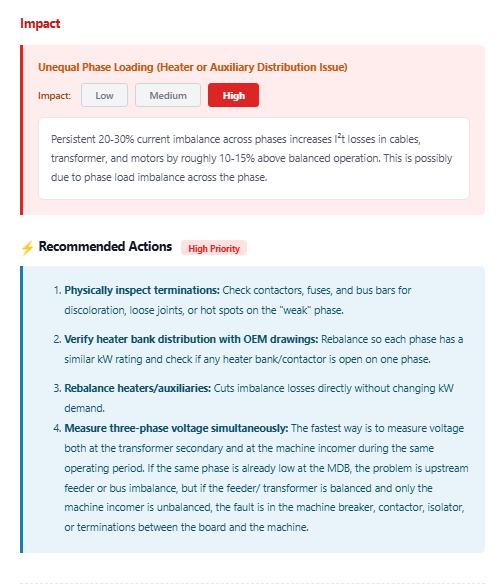
Snapshot of a R.I.P.E. alert at an undisclosed client facility
This isn’t just theory. The impact is clear when you look at how facilities actually operate with R.I.P.E.
Here are some of the use cases:
- When energy losses are invisible but expensive
At a manufacturing plant, energy bills were consistently higher than expected. Nothing obvious seemed wrong. Machines were running. Operations were stable. But under the surface, there were small inefficiencies:
- aging machines running when not needed,
- equipment operating under overload, and
- electrical imbalances causing losses.
With R.I.P.E., these weren’t just detected. They were clearly mapped and explained. Once addressed, the result was simple but powerful:
Energy bills dropped by 15%, saving around 45,000 units every month.
No major overhaul. Just visibility and the right actions at the right time.
2. When downtime is the real cost
In another facility, critical machines worth millions were experiencing occasional trips. Not frequent enough to trigger an alarm. But enough to create risk.
The kind of issue that’s easy to ignore until it becomes a major failure.
R.I.P.E. identified patterns that pointed to deeper problems:
- a faulty component causing electrical disturbances, and
- an imbalance in the system design.
These were early signals, things that would have likely led to serious failures. By acting on these insights, the facility avoided:
Nearly 20 hours of downtime every month and saved significant operational losses (~USD 60k) annually
More importantly, they gained something harder to quantify: confidence in their system.
3. When operations lack visibility
In another case, a plant struggled to understand why certain shifts consumed more energy than others. There was no clear visibility into:
- which machines were inefficient,
- which zones were consuming more energy, or
- How production is linked to energy costs.
R.I.P.E. brought clarity.
It broke down energy use by machine, by zone, and even by shift — making patterns visible for the first time. The outcome wasn’t just lower costs.
It led to:
- better operational decisions
- improved efficiency across shifts
- and even helped the facility move towards energy certifications
From observation to action by Soul powered by RIPE
What makes R.I.P.E. different is that it doesn’t just give you data. It gives you a direction. When something changes, the system:
- alerts you in real time
- explains what’s happening
- and suggests what to do
Over time, it even learns from actions taken, building a continuous improvement loop. It’s less like a dashboard and more like having an always-on expert guiding your decisions.
Conclusion
Inside every facility, things are happening that no one can see.
Energy flowing.
Machines adapting.
Small problems forming.
The question is:
Are you only finding out after something goes wrong? Or are you seeing it as it happens?
R.I.P.E. makes that difference.
It turns energy from something you react to… into something you understand, control, and optimise in real time.
Ready to optimise your facility with Soul? Learn more about RIPE and Soul here.
Please do visit us on the website for more information, and maybe tell your friends about it too. It will go a long way in keeping our energy and environment managed better.